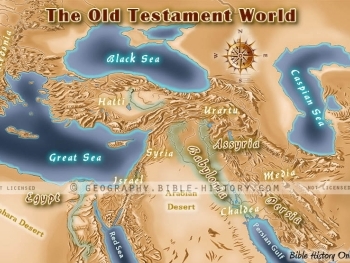
What Islands are in the Aegean Sea?

What Islands are in the Aegean Sea?... hero image

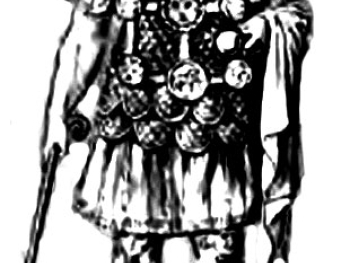
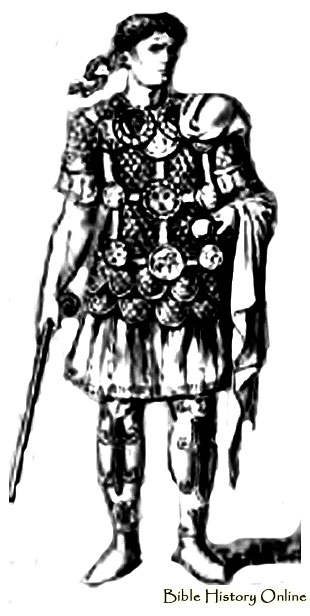
In ancient Rome the “centurion” meant “captain of 100”, and the Roman centurion was captain over 100 foot soldiers in a legion. The centurion was loyal and courageous, beginning as a soldier in the army and working their way up the ranks. They were noticed by the general for their skill and courage in battle, and were made officers.

Source:
Roman Centurion


Related Articles:

How did the ancient Egyptians build the pyramids?

The pyramids of Egypt stand as iconic symbols of ancient Egyptian civilization, representing remarkable architectural and engineering achievements. Constructed as tombs for pharaohs, these colossal structures continue to captivate the world with thei...

What were the Primary Sources for Assyrian History? post related image

What were the Primary Sources for Assyrian History?

Scholars recognize that the primary sources for the study of ancient Assyria are the Assyrian Annals, the Assyrian Chronicles and Eponym Canon, The Assyrian King List, Assyrian Sculptures, and the Bible. The Assyrian Annals. The scribes of the chief ...

What does the word Babylon mean? post related image

What does the word Babylon mean?

Babylon is Akkadian “babilani” which means “the Gate of God(s)” and it became the capital of the land of Babylonia. The etymology of the name Babel in the Bible means “confused” (Gen 11:9) and throughout the Bible, Babylon was a symbol of...

How was Jesus’ Name Written?

The name of Jesus, in its original language, was written in Hebrew as יֵשׁוּעַ (Yeshua) or יְהוֹשֻׁעַ (Yehoshua). In the New Testament, the name appears in Greek as Ἰησοῦς (Iēsous). The specific form used in the Bible depen...

Who Appointed Pontius Pilate Procurator of Judea? post related image

Who Appointed Pontius Pilate Procurator of Judea?

Only the Jewish historian Josephus provides us with what little information is known about Pilate’s life before 26 A.D. when Tiberius Caesar appointed him procurator of Judea. The sketchy information suggests that Pilate was probably an Italian bor...

What were the Dimensions of the Platform of the Temple? post related image

What were the Dimensions of the Platform of the Temple?

The Platform for the Temple compound built by Herod the Great was a monumental feat, considering the steepness of the surrounding terrain. According to scholars the flat platform measured 1041 feet on the north side, 1556 feet on the east side, 929 f...

How did the ancient Romans manage their water supply and sewage systems?

The ancient Romans were remarkable engineers when it came to managing water supply and sewage systems. They developed sophisticated systems that provided clean water for public use and efficiently removed wastewater from cities. Water Supply: Aqueduc...

Why was Pompey Referred to as “The Great”? post related image

Why was Pompey Referred to as “The Great”?

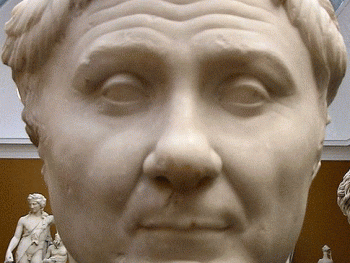
Pompey was a military genius and his soldiers recognized this and referred to him as “Magnus” which means the great, thus the name Gnaeus Pompeius Magnus. Source: Pompey the Great...

Why were the Seven Hills of Rome Significant? post related image

Why were the Seven Hills of Rome Significant?

The seven hills of Rome were very noticeable in the landscape of the city of Rome. The hills were no higher than 60 yards, but they had steep slopes that rose above the flat marshland. Several small streams flowed between the seven hills. The names o...

What are the Historical Sources for the Second Temple?

There are five primary sources for the study of the Second Temple in Jerusalem, the Temple of Herod. They are: The BibleThe Books of MaccabeesJosephus*The Dead Sea ScrollsThe Mishna** *War book 5, chapter 5; Antiquities book 15 chapter 11**tractates ...

What was a Roman Centurion? post related image

What was a Roman Centurion?

In ancient Rome the “centurion” meant “captain of 100”, and the Roman centurion was captain over 100 foot soldiers in a legion. The centurion was loyal and courageous, beginning as a soldier in the army and working their way up the ranks. The...

How did the ancient Greeks and Romans practice medicine and treat illnesses?

The ancient Greeks and Romans left a lasting legacy in the field of medicine, with their innovative theories and treatments that shaped the foundations of Western medicine. Drawing upon a combination of empirical observations, philosophical insights,...

What were the major trade routes and trading practices of the ancient world?

Trade played a vital role in connecting civilizations and fostering cultural exchange in the ancient world. From the bustling markets of Rome to the Silk Road that stretched across Asia, ancient trade routes facilitated the exchange of goods, ideas, ...

What was the Persian Gulf in the Bible?

The Persian Gulf marked the southeast corner of the world of the Old Testament, with the Caspian Sea marking the northeast corner. Many rivers flow into the Persian Gulf including the famous Tigris and Euphrates rivers. In Old Testament times the nor...

What Historical Sources do we have for the Life of Alexander the Great?

The five primary sources we have for the events in the life of Alexander are Diodorus Siculus, Quintus Curtius Rufus, Plutarch, Lucius Flavius Arrianus, and the Alexander Romance. “For I myself believe that there was at that time no race of mankind...

Does the Bible Mention the Mediterranean Sea?

Yes, the Bible mentions the Mediterranean Sea on multiple occasions, as it played a significant role in the geographical and cultural context of the biblical world. Here are a few references: In Exodus 23:31, God promises to give the Israelites the l...

What was the role of slavery in ancient societies like Rome and Greece?

Slavery was deeply ingrained in the social and economic fabric of ancient Rome and Greece, shaping the structure of these societies in significant ways. With vast numbers of enslaved individuals serving as laborers, domestics, and even skilled profes...

What Is the Origin of the Japanese and Chinese Peoples? A Biblical Perspective post related image

What Is the Origin of the Japanese and Chinese Peoples? A Biblical Perspective

The question of the origins of nations and peoples has fascinated humanity for centuries. From a biblical perspective, the origins of all nations can be traced back to the descendants of Noah’s three sons—Shem, Ham, and Japheth—following the gr...


Read The Bible

About

Welcome to Free Bible: Unearthing the Past, Illuminating the Present! Step into a world where ancient history and biblical narratives intertwine, inviting you to explore the rich tapestry of human civilization.

Discover the captivating stories of forgotten empires, delve into the customs and cultures of our ancestors, and witness the remarkable findings unearthed by dedicated archaeologists.

Immerse yourself in a treasure trove of knowledge, where the past comes alive and illuminates our understanding of the present.

Join us on this extraordinary journey through time, where curiosity is rewarded and ancient mysteries await your exploration.

Recent posts