Who Were the Main Powers in Italy Before the Roman Empire?

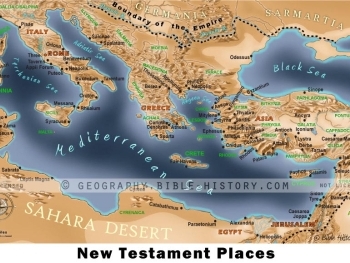
The main powers in ancient Rome were Carthage, Greece, and Etrura. The Italian Peninsula is located right in the heart of the Mediterranean Sea. Rome is located right in the heart of Italy on a large plain known as Latium.

Source: Latium and Geography


Related Articles:

What was the Persian Gulf in the Bible?

The Persian Gulf marked the southeast corner of the world of the Old Testament, with the Caspian Sea marking the northeast corner. Many rivers flow into the Persian Gulf including the famous Tigris and Euphrates rivers. In Old Testament times the nor...

What is the Pantheon? post related image

What is the Pantheon?

The Pantheon, or the temple of all the gods. It is the best preserved ancient building in Rome and is universally admired for its fine dome and beautiful columns. Source: The Pantheon...

Who were the Main Historical Sources for the Life of Nero? post related image

Who were the Main Historical Sources for the Life of Nero?

The main historical sources for the life of Nero were Tacitus Tacitus Publius Cornelius (55-120 A.D. approx.), Suetonius Svetonius Tranquillus (70-140 A.D. approx.), Cassius Dio Dion Cassius Cocceianus (155-235 A.D. approx.), Jewish and Christian Tra...

What was a Roman Legion? post related image

What was a Roman Legion?

Augustus, the first emperor of Rome had in his empire 25 legions of approximately 6,000 soldiers each. A legion was formed of 10 Cohorts (540 men in each Cohort). Each Cohort was subdivided into 6 Centuries (90 men formed a Century), and each legion ...

What were the major trade routes and trading practices of the ancient world?

Trade played a vital role in connecting civilizations and fostering cultural exchange in the ancient world. From the bustling markets of Rome to the Silk Road that stretched across Asia, ancient trade routes facilitated the exchange of goods, ideas, ...

Where was the location of the Transfiguration? post related image

Where was the location of the Transfiguration?

Matthew 17:1 – After six days, Jesus took with him Peter, James, and John his brother, and brought them up into a high mountain by themselves. In the 4th century AD a tradition was established that Mount Tabor was the scene of the transfiguration a...

What is the Bronze Bust of Augustus? post related image

What is the Bronze Bust of Augustus?

This bust was discovered by archaeologists at Meroe (Modern Sudan) and is currently in the British Museum. It depicts the face of the Roman Emperor Augustus who ordered the census just before the birth of Jesus. This brought the parents of Jesus (Jos...

What were the Primary Sources for Assyrian History? post related image

What were the Primary Sources for Assyrian History?

Scholars recognize that the primary sources for the study of ancient Assyria are the Assyrian Annals, the Assyrian Chronicles and Eponym Canon, The Assyrian King List, Assyrian Sculptures, and the Bible. The Assyrian Annals. The scribes of the chief ...

What were the significant contributions of ancient Mesopotamia to civilization?

Ancient Mesopotamia, the land between the Tigris and Euphrates rivers, made significant contributions to the development of civilization. Here are some of its notable achievements: Writing System: Mesopotamia is credited with the invention of one of ...

What Weapons did the Roman Soldier Carry? post related image

What Weapons did the Roman Soldier Carry?

The weapons of a Roman solder included: the gladius (the short, straight, two-edged sword with which he would thrust rather than slash), and this he carried on a belt either from the shoulder or round the waist. He also carried the javelin “pilum...

What was a Roman Centurion? post related image

What was a Roman Centurion?

In ancient Rome the “centurion” meant “captain of 100”, and the Roman centurion was captain over 100 foot soldiers in a legion. The centurion was loyal and courageous, beginning as a soldier in the army and working their way up the ranks. The...

What was life like for women in ancient Rome?

Ancient Rome is often associated with grand architecture, legendary emperors, and mighty legions. However, the daily life of women in ancient Rome remains an intriguing and less-explored aspect of this civilization. While gender roles and expectation...

Is the Hebrew Text on the Scroll of Isaiah Accurate? post related image

Is the Hebrew Text on the Scroll of Isaiah Accurate?

Among the Dead Sea Scrolls discovered in 1947 was found the “Scroll of Isaiah” inside of a clay jar and well preserved, dating to the 2nd century BC. The entire Hebrew text of the prophet Isaiah was found in “perfect” condition. When compared...

Where was the land of Assyria located? post related image

Where was the land of Assyria located?

The land of ancient Assyria was located in the far north of the Tigris river near modern Mosul. In their earliest history Assyria was a small territory on the left bank of the northern Tigris River. Over time their borders extended to the area be...

How did Topography influence the people of Ancient Greece?

The people of ancient Greece developed unique characteristics because of the topography of their country. The coastline curved inward very peculiarly, causing the bays to become very prominent, and stretching far out into the Mediterranean Sea. This ...

Why is the Arch of Titus Relief so Significant? post related image

Why is the Arch of Titus Relief so Significant?

In 70 AD the Romans laid siege to Jerusalem and utterly destroyed and buried one of the greatest cities of the ancient world. This was all predicted by Jesus in the New Testament approximately 40 years prior. Source: Relief from the Arch of Titus ...

What is the Passover Papyrus? post related image

What is the Passover Papyrus?

The Passover Papyrus is a letter from among the elephantine papyri that dates back to the time of Darius II, in 419 BC. In 1907 archaeologists discovered in Aswan papyrus fragments of a letter that bears the royal authority of the Persian Empire (not...

How did the ancient Persians create and administer their vast empire?

The ancient Persian Empire, known for its grandeur and administrative prowess, stands as a testament to the organizational genius of its rulers. From the Achaemenid to the Sassanian dynasties, the Persians created and administered a vast empire that ...


Read The Bible

About

Welcome to Free Bible: Unearthing the Past, Illuminating the Present! Step into a world where ancient history and biblical narratives intertwine, inviting you to explore the rich tapestry of human civilization.

Discover the captivating stories of forgotten empires, delve into the customs and cultures of our ancestors, and witness the remarkable findings unearthed by dedicated archaeologists.

Immerse yourself in a treasure trove of knowledge, where the past comes alive and illuminates our understanding of the present.

Join us on this extraordinary journey through time, where curiosity is rewarded and ancient mysteries await your exploration.

Recent posts