Waterfront properties provide unique advantages, including direct access to water, improved lifestyle, and increased long-term value. However, these benefits come with specific challenges that cannot be solved using standard construction methods. Constant exposure to water, soil movement, and environmental changes gradually affect the shoreline, making it unstable and vulnerable to erosion.
Without proper protection, even a well-maintained waterfront property can lose land over time and develop structural risks near the water’s edge. Property owners looking for reliable, long-term solutions can explore the full range of available options on the page marine construction services, where different shoreline protection and waterfront construction systems are presented based on real conditions.
Why waterfront properties require specialized construction
Construction near water is fundamentally different from building on stable land. The interaction between soil and water creates dynamic conditions that require tailored solutions.
- Continuous moisture exposure - materials used near water are constantly exposed to moisture, which accelerates wear and reduces lifespan if not properly selected.
- Soil instability - shoreline soil is often softer and less stable, making it more prone to movement, collapse, and erosion under pressure.
- Water pressure - water exerts continuous force on the shoreline, especially during storms or changes in water level.
- Environmental changes - seasonal variations, rainfall, and water level fluctuations create additional stress on the shoreline structure.
Because of these factors, marine construction solutions must be designed specifically for the environment rather than adapted from traditional construction methods.
What marine construction services include
Marine construction is a comprehensive approach that includes both protective and functional structures. Each element is designed to solve a specific problem while contributing to the overall stability of the shoreline.
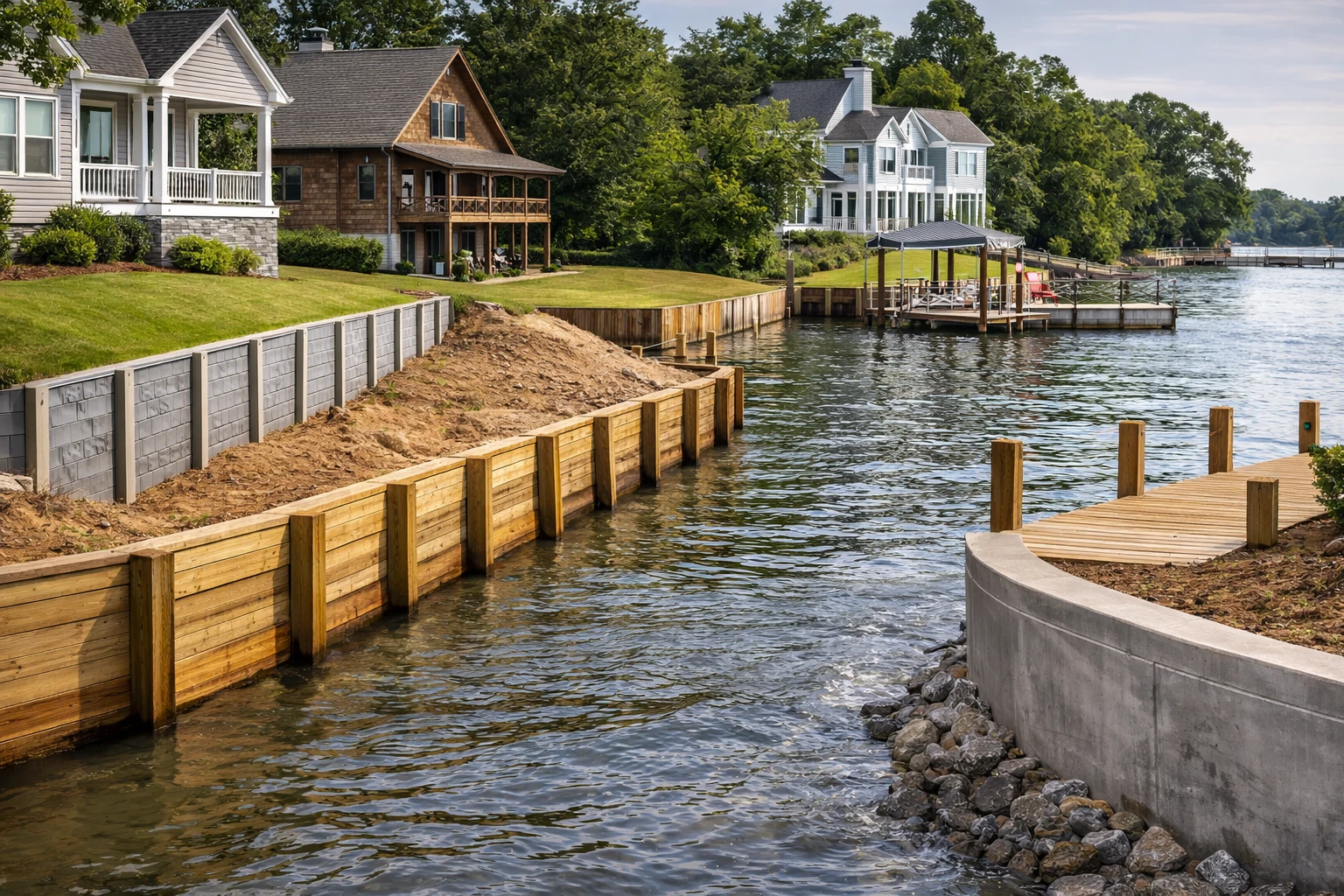
- Bulkheads - these structures retain soil and create a stable edge between land and water. They prevent erosion and help maintain the original shape of the shoreline.
- Seawalls - used in areas with stronger water activity, seawalls provide additional resistance against waves and protect the property from continuous water impact.
- Docks and piers - these structures improve accessibility, allowing safe and convenient access to the water for recreational or practical use.
- Boardwalk systems - designed for safe movement along the shoreline, they also improve the usability and visual appeal of the property.
- Piling systems - these provide structural support for waterfront installations and ensure long-term stability of construction elements.
Each of these components can be used individually or combined, depending on the conditions and goals of the project.
How shoreline protection improves property value
Marine construction is not only about preventing damage. It also directly impacts the overall value and usability of the property.
- Preservation of land - preventing erosion ensures that the property retains its original size and shape over time.
- Increased safety - stabilizing the shoreline reduces the risk of soil collapse and structural damage near the water.
- Better functionality - properly designed waterfront structures allow safe and convenient use of the shoreline.
- Long-term investment value - protected waterfront properties are more attractive and maintain higher market value.
Common mistakes property owners make
Many shoreline problems become more severe due to delayed action or incorrect decisions. Understanding these mistakes helps avoid unnecessary costs and complications.
- Delaying protection - waiting until erosion becomes visible often leads to more expensive solutions.
- Choosing the wrong solution - selecting a system without considering site conditions can reduce effectiveness.
- Using standard construction methods - traditional approaches are not designed for waterfront environments.
- Ignoring long-term performance - focusing only on initial cost instead of durability leads to higher expenses over time.
How to approach a waterfront project correctly
A structured approach ensures that the chosen solution matches the real conditions of the property and delivers long-term results.
- Evaluate shoreline condition - identify erosion level and soil stability before making decisions.
- Define project goals - determine whether the priority is protection, access, or both.
- Select appropriate materials - choose materials based on environmental exposure and durability requirements.
- Plan for long-term use - consider how the property will be used over time.
- Implement a complete solution - combine protective and functional elements where necessary.
Long-term benefits of professional marine construction
When the right approach is used, marine construction provides benefits that extend far beyond the initial installation.
- Reduced risk of erosion and land loss
- Lower maintenance costs over time
- Improved usability of waterfront space
- Increased durability of shoreline structures
Final thoughts
Marine construction plays a critical role in maintaining and protecting waterfront properties. Each shoreline has unique conditions that require a tailored approach. By choosing the right solution and addressing issues early, property owners can ensure long-term stability, protect their investment, and fully enjoy the benefits of their waterfront location.
Coastal Construction Shoreline Solutions Waterfront Stability Property Value Erosion Control Docks & Piers Bulkheads & Seawalls Shoreline Protection Marine Construction